Rate Hike
The Federal Reserve raises rates for the first time since 2023, and Asian markets steady as the dollar climbs.
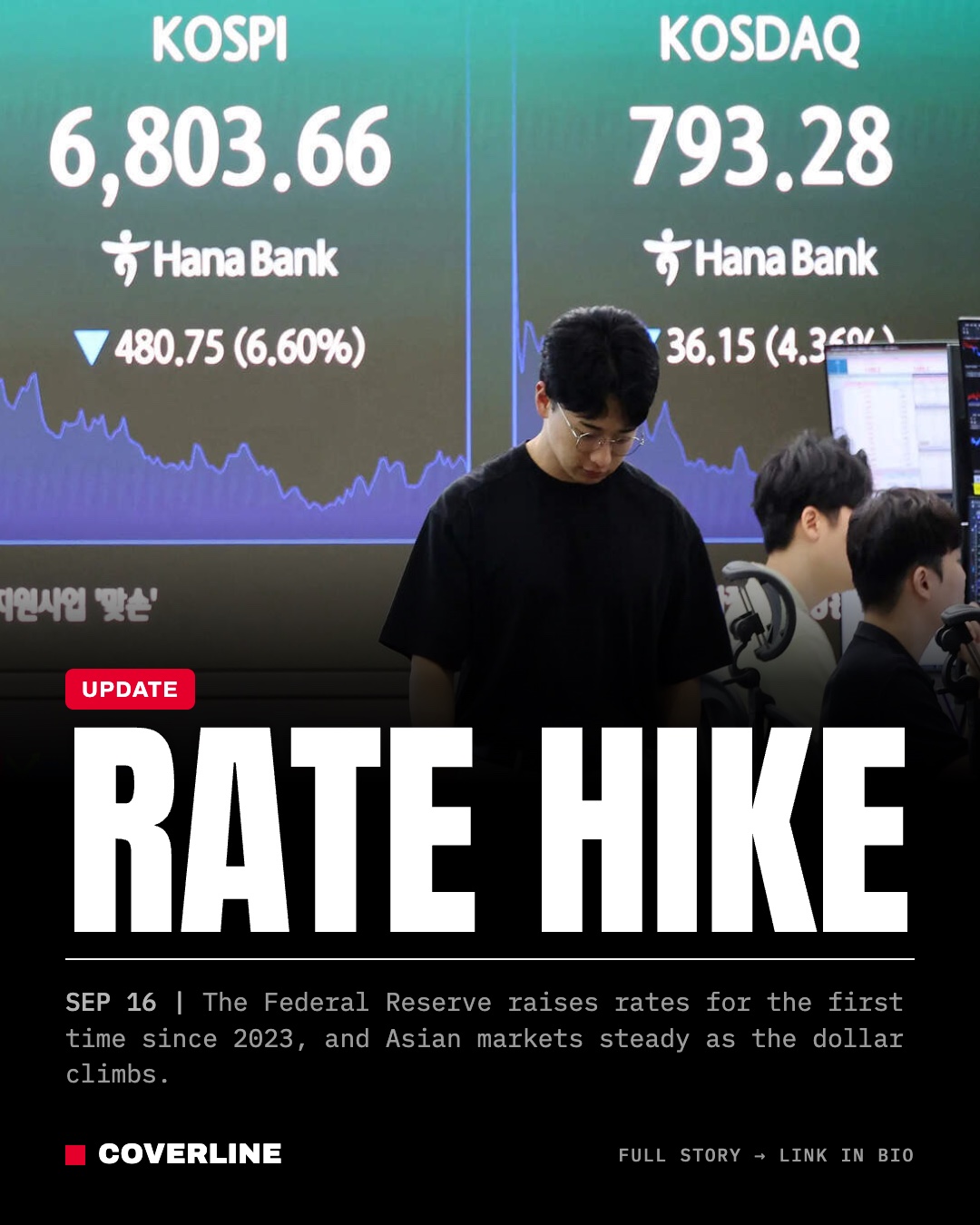
The Federal Reserve raised interest rates for the first time since 2023. Asian stocks fell. The dollar climbed to a two-week high. Oil piled fresh pressure onto inflation.
Treasury yields had already hit their highest level since 2023 in the run-up to the decision, after the government bought back fewer long-dated securities than investors expected, The Economic Times reported. August producer prices rose 0.4%, the fastest pace since May, according to the outlet. The S&P 500 closed the prior session down 0.5%, dragged down by industrial and consumer-discretionary shares. Japanese and South Korean equity futures slid too, Bloomberg reported.
Not just stocks. Oil added pressure of its own. Crude surged toward $90 a barrel after a U.S. strike on Iran's Larak Island, Reuters reported. Brent later broke above $100 as attacks on shipping through the Strait of Hormuz stoked fears of wider disruption, according to Bloomberg. U.S. crude then topped $97 a barrel, extending its rally to an eighth straight session. Brent settled above $101.
"The longer elevated prices persist, the harder it becomes for markets to shrug the inflation impulse," Evelyne Gomez-Liechti, a multi-asset strategist at Mizuho International Plc, told Bloomberg. Kenny Polcari at SlateStone Wealth put it more bluntly. "The temperature just got turned up again," he told Bloomberg. "The risk premium is alive and well, and the risk to energy supplies coming out of the Gulf is real."
Currencies split by region. The South Korean won gained 0.5%, pushing its year-to-date advance to about 5.1% on strong semiconductor exports, Reuters reported. Indonesia's rupiah fell 0.3%, to 17,755 per dollar. In the Philippines, the peso slipped 0.3% and traded near a record low.
South Korea's KOSPI fell as much as 3.6% earlier in the session. It recovered to close 0.5% higher. Taiwan's benchmark slipped 0.4% but held onto a monthly gain of about 7%, Reuters reported.
Christine Lagarde, the European Central Bank president, added to the pressure on global policy. She projected eurozone inflation would stay above target into 2027. Iran warned it will escalate strikes if U.S. attacks on its territory continue, Bloomberg reported.
Investors now turn to the next U.S. nonfarm payrolls report and consumer price index reading for signs of where the Fed goes from here.
Joe Brusuelas, chief economist at RSM US LLP, told The Economic Times, "A hot US producer-price print and a hawkish-sounding Christine Lagarde both speak to a reality that points to the possibility a global central bank rate-hike cycle may be in the offing, which does not support risk assets today or in the short term."