Hormuz Standoff
Iran awaits a U.S.
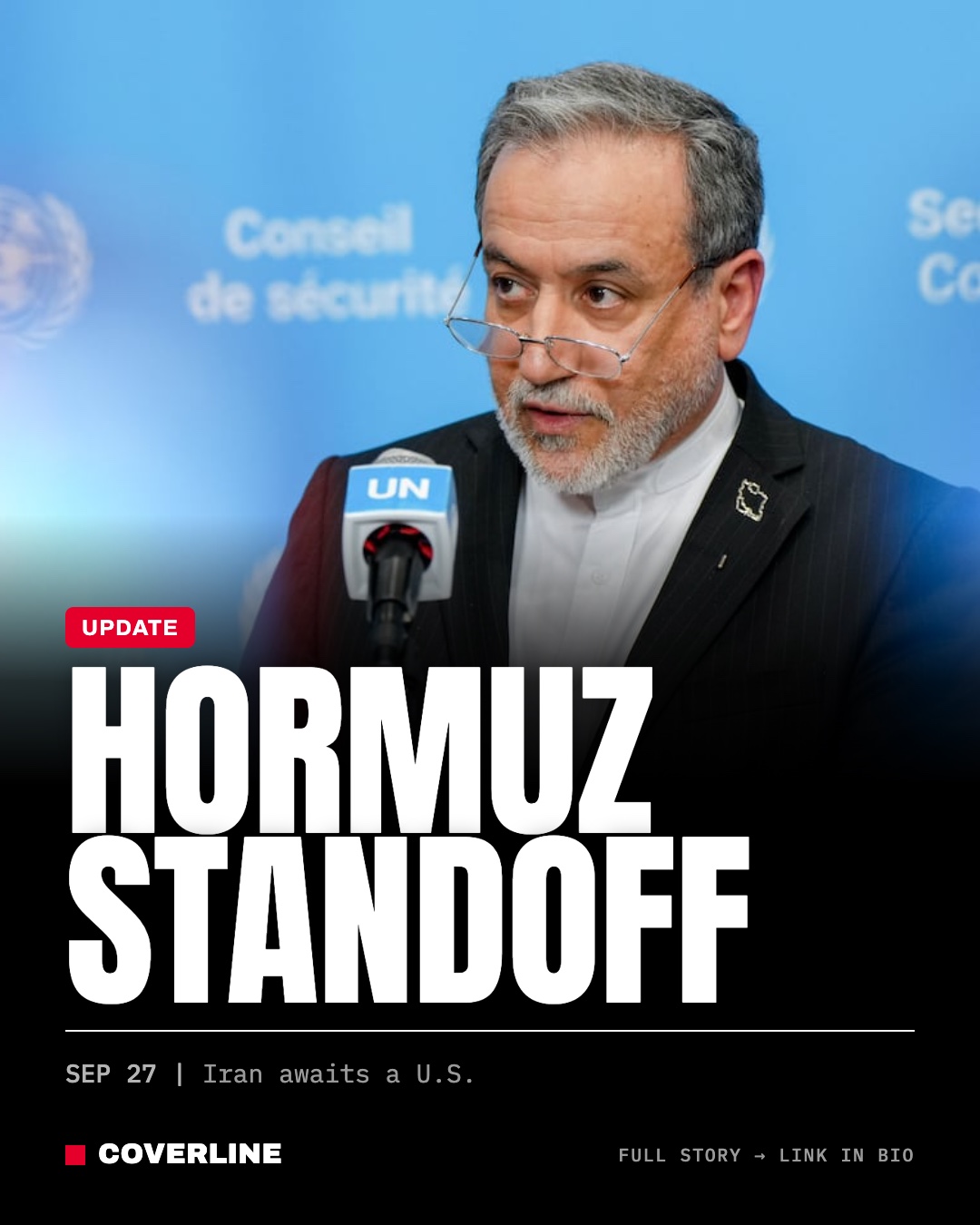
Iran said Sunday it's still waiting for an official U.S. response to its plan to reopen the Strait of Hormuz.
Foreign Minister Abbas Araghchi told reporters at the United Nations that the strait could reopen within seven days if Washington lifts its naval blockade, waives oil sanctions and observes a ceasefire covering Lebanon, according to the Independent. Iran would also resume talks on its nuclear program, CNBC reported. Nothing new here. The conditions mirror a U.S.-Iran memorandum signed in June that collapsed within weeks, CNN reported.
Saturday, President Trump rejected the offer. Unacceptable, he called it. "They want to make a deal where they open the strait immediately because they're losing so badly," Trump told reporters as he left the White House, NPR reported. He said he likes making deals too, but this one would not work.
Citing U.S. officials, the Wall Street Journal reported Friday that Trump told staff a renewed bombing campaign is likely after November's midterm elections. His views could still shift in the weeks ahead, the officials told the newspaper, according to CNN.
Araghchi said he had heard only Trump's public comments, not a formal reply. "We saw the first reaction from the US president, but nothing has been conveyed to us from the mediators yet," he said, CNN reported. A White House official told CNN the two governments are having "positive and constructive discussions through the mediators" and are "not in a rush," citing U.S. control of the strait.
Tehran's military says it's ready for another round of fighting. Army spokesperson Mohammad Akraminia said Iran's forces are fully prepared for confrontation and warned the U.S. would suffer greater damage in any new attack, the Independent reported. Army chief Amir Hatami went further, saying the war has reached a critical stage and that Iran will not accept being shut out of trade through the waterway, the Independent reported.
In an interview taped for CBS and set to air Sunday, Iranian President Masoud Pezeshkian said Iran will honor its commitments if the U.S. shows it does not intend to topple the government, NPR reported.
"The choice now rests with the United States," Araghchi said.