Diesel Release
G7 nations agree to release up to 100 million barrels of diesel and crude oil to fight soaring fuel prices.
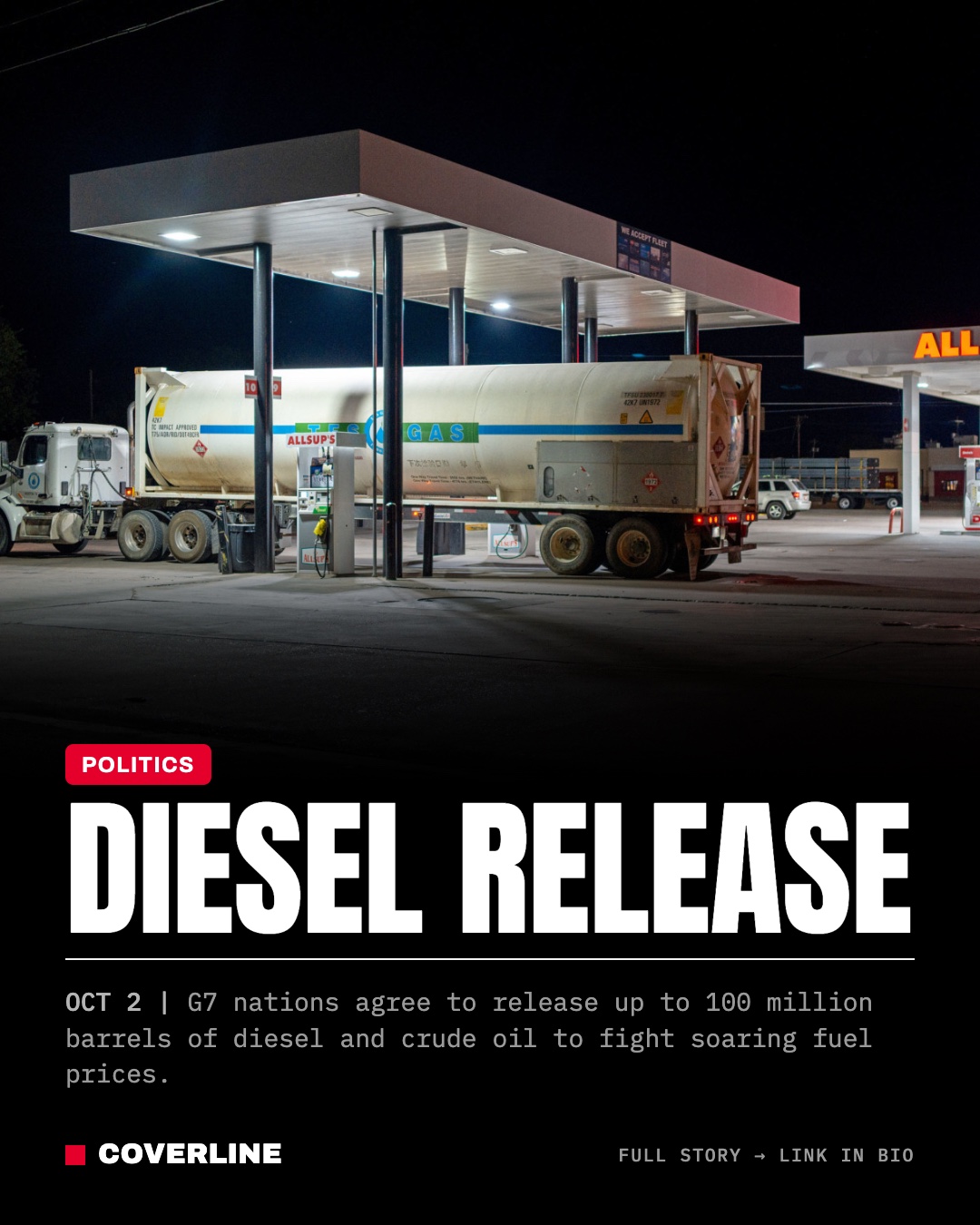
Group of Seven nations agreed Friday to release up to 100 million barrels of diesel and crude oil to cap surging fuel prices.
Just over four months. That's how long the release runs, per the G7's joint statement, with a large diesel tranche landing within the first 20 days. Brent crude closed Friday at $102.25 a barrel, NBC News and CNBC reported, up more than 60% since the start of the year.
A week of pressure preceded the deal. The Trump administration had leaned hard on European allies, NBC News reported. Treasury Secretary Scott Bessent said Thursday that American farmers, truckers and businesses should not be left carrying the burden of a global diesel shortage alone. Trump himself had threatened to ban U.S. diesel exports if Europe did not release more of its own stocks, BBC News reported, a step that would have eased prices at home while raising them abroad.
At the White House Friday, Trump said an export ban "was never really on the table" and called Europe's move "a great thing," BBC News reported. Emmanuel Macron, who chaired the G7 videoconference, said the release would be coordinated through the International Energy Agency and would help lower diesel prices, according to NPR.
The European Commission rejected the export ban idea earlier Friday, saying it "fully rejects any ban on diesel." A ban, a spokeswoman told reporters, "would not be beneficial to anyone," NBC News reported. UK Foreign Secretary Ed Miliband said the measures would stabilize energy supplies and shield households and businesses from price shocks, BBC News reported.
Prices have climbed since the United States and Israel struck Iran on Feb. 28. They jumped again after Russia's war in Ukraine escalated in July. The average U.S. diesel price has risen 70% since late February, to $6.37 a gallon, NBC News reported. French drivers now pay $10 a gallon for diesel, NPR reported.
The release starts immediately. It lands three weeks before the Nov. 3 midterm elections, NBC News reported, with just 41% of registered voters approving of Trump's handling of the economy in the network's most recent polling.
"We have also agreed there will be no export bans or limitations between partners in any category," Macron said, according to NPR.