Hemp Ban
A looming federal ban threatens to wipe out a $28 billion hemp THC industry built on a legal loophole.
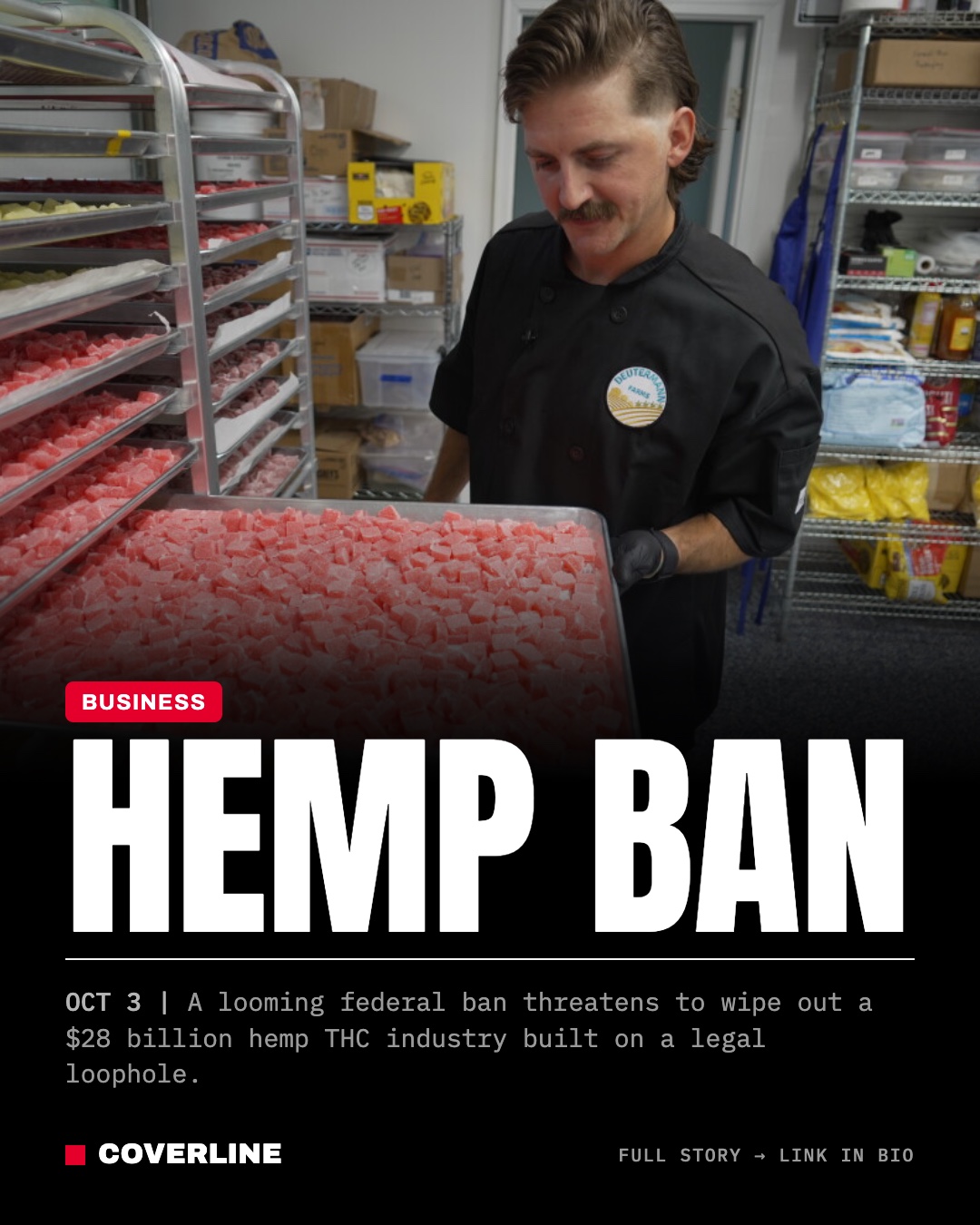
Nicholas Hohns makes THC gummies at Deutermann Farms near Raleigh, North Carolina. He could lose a business built on 100-hour weeks. "You worked 100 hours a week for the past four years, and, yeah, you made some money," he told ABC News. "But now you might have nothing to show for it."
Congress voted to ban most THC hemp products. A $28 billion industry is now racing to stop it before December 11.
Retail revenue could fall $28.3 billion. The ban would also cost 225,000 jobs and $2.1 billion in state sales tax, according to a Whitney Economics report last month cited by ABC News and WJXT News4JAX.
These products exist because of a gap in the 2018 farm bill. Senate Republican Mitch McConnell of Kentucky pushed that bill through to give farmers a new crop, ABC News reported. It defined hemp as any cannabis plant with less than 0.3% delta-9 THC by weight. Companies found they could keep drinks, gummies and vapes under that line by weight while still packing enough THC to intoxicate. Gas stations and convenience stores picked up the products, where they reached teenagers, WJXT News4JAX reported. Dozens of states moved to regulate or ban them on their own.
McConnell closed the loophole late last year. He attached a hemp THC ban to the bill that ended the longest government shutdown in U.S. history, both outlets reported. That ban caps THC at 0.4 milligrams per container. Industry groups say the limit would also wipe out non-impairing CBD lotions, according to Jonathan Miller of the U.S. Hemp Roundtable, cited by ABC News.
Trump signed a short-term funding bill last month that pushed the ban's effective date from November 12 to December 11. Congress now has more time to consider regulating the products instead of banning them outright.
Eric Zipperle and Jim Higdon own Cornbread Hemp in Kentucky. They said they'd accept a 5 milligram cap to stay in business. Not 0.4 milligrams. The company employs 105 people, sells hemp beverages in 18 states and expects $65 million in revenue this year, WJXT News4JAX reported. "If it goes through in December, this place is toast," Zipperle said. "It's gone."