Airport Attack
Saudi Arabia vows retaliation after a Houthi missile strike on Riyadh's airport kills at least 12 and wounds hundreds.
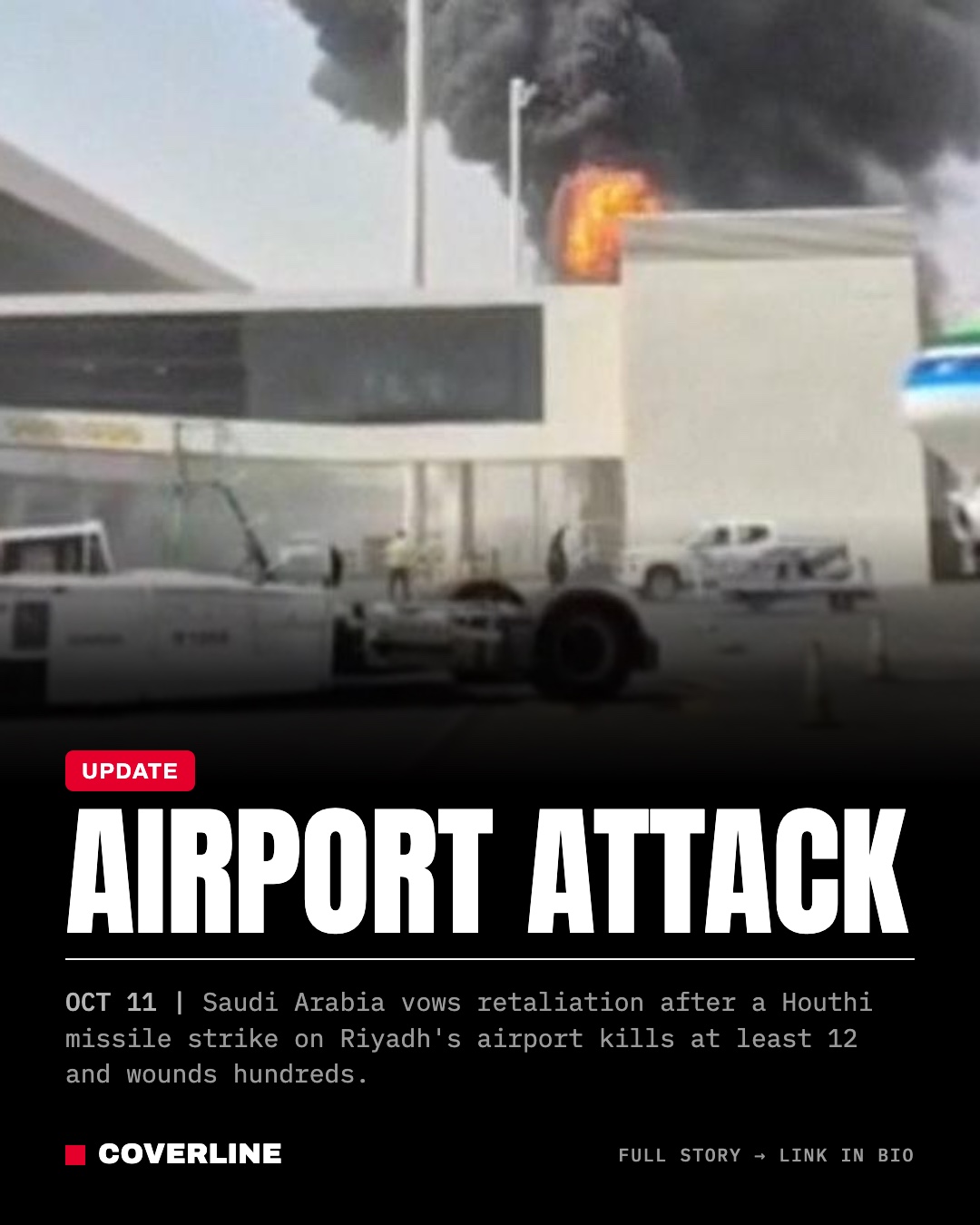
Saudi Arabia's government vowed retaliation Saturday after a Houthi missile strike on Riyadh's airport killed at least 12 people and injured more than 300.
The Guardian put the toll at 13 dead and over 300 wounded, citing Saudi state television footage that showed passengers engulfed in smoke as debris fell around them while they waited to board a flight. Saudi Arabia suspended all flights to and from the airport, its second-busiest, until next Saturday.
Four days earlier, a separate strike hit King Khalid International Airport and killed three Saudi nationals, including a pilot, according to CNBC and DW. Saudia named him Captain Hamoud Ali Alkalthami. The Houthis, backed by Iran, claimed both attacks.
Major General Turki al-Malki, spokesperson for the Saudi-led coalition, said forces had destroyed three Houthi missile launchers. Further attacks on civilians, he warned, would draw a firm response, CNBC and DW reported.
The disruption didn't stay in Riyadh. Lufthansa Group grounded flights to the city through October 16. The European Union Aviation Safety Agency told carriers to steer clear of additional Saudi airspace, DW reported. Air India suspended its flights through Saturday.
President Donald Trump said over the weekend he'd look at joining Saudi-led strikes against the Houthis, the Guardian reported. Mohammed Al Bukhaiti, a member of the Houthi political bureau, told AFP the group would meet any US involvement with what he called a swift and painful response targeting American interests in the region.
Pakistan would defend Saudi Arabia "by whatever means" it had available, Defense Minister Khawaja Muhammad Asif said, citing a mutual defense arrangement among Pakistan, Saudi Arabia and Turkey, according to a report carried by Free Republic. He did not say whether Pakistani forces had taken part in any strikes.
At a petroleum conference in Riyadh, Energy Minister Abdulaziz bin Salman said fear has no place in the Saudi lexicon, the Guardian reported. Aramco chief executive Amin Nasser added that no nation, however capable, could protect its energy supplies alone.
"If the US becomes involved in the aggression against Yemen," Al Bukhaiti said, "we will not deliberate over the decision to respond."