Israel Votes
Israelis vote in record numbers in an election seen as a referendum on Prime Minister Benjamin Netanyahu.
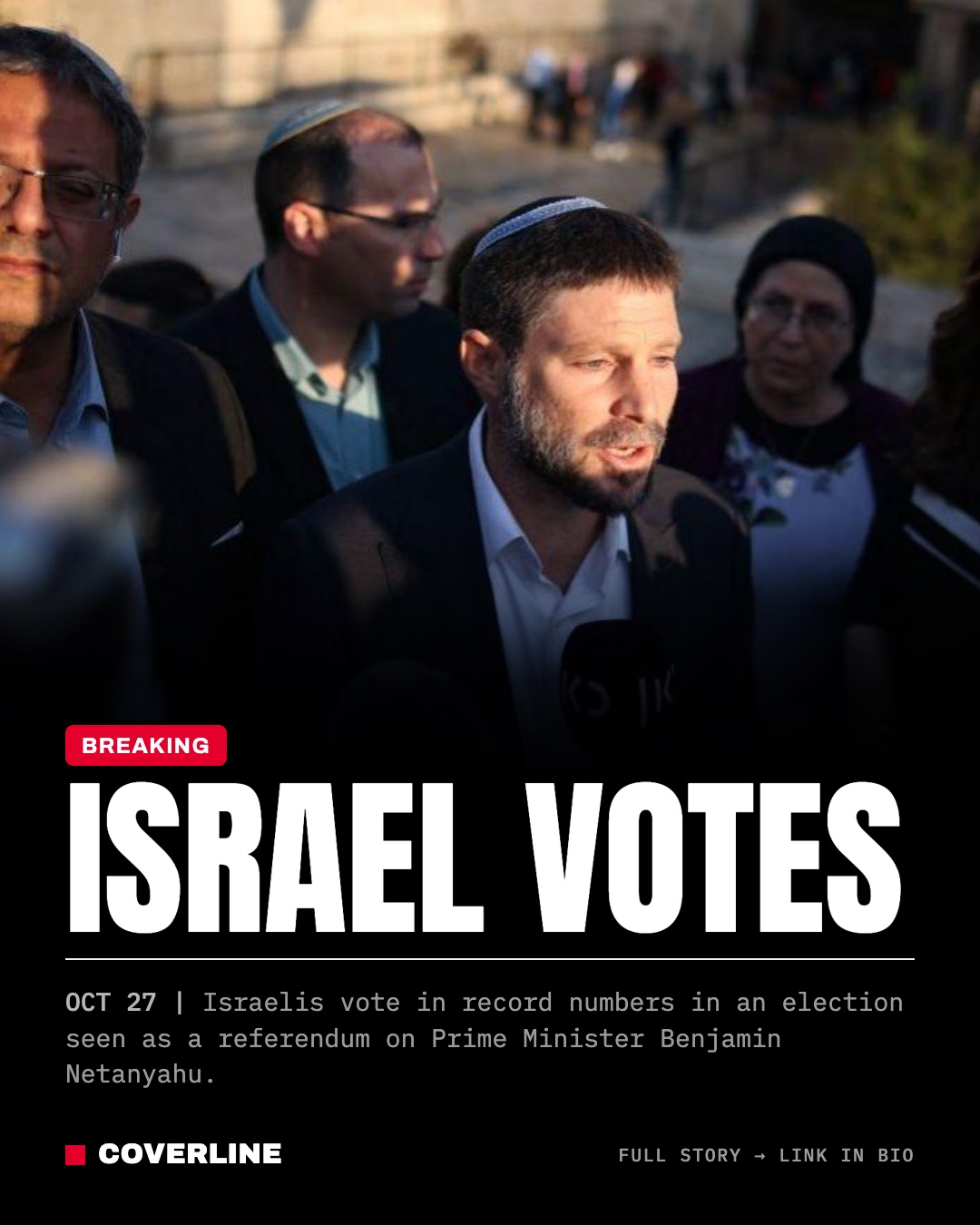
Israelis cast ballots in record numbers Tuesday, in the first national election since the Hamas-led attack of Oct. 7, 2023.
Turnout hit 16.68% in the first three hours of voting. That's the highest at that point in any election since 1981, Israel's Central Election Committee said, according to DW. By 10 a.m., more than 1.2 million people had voted, the committee's acting director general, Dean Livne, said. Overall turnout hasn't topped 72.3% since the turn of the century, and it reached 70.6% in the last election, in 2022, DW reported. Roughly 7.3 million Israelis are eligible to vote, including about 1.2 million Palestinian citizens of Israel, DW said.
The BBC called the vote a referendum on Netanyahu. Polls published Friday showed him running almost neck-and-neck with Gadi Eisenkot, a former military chief of staff now leading the centrist Yashar party. Neither bloc was projected to win the 61 seats needed for a majority in the 120-seat Knesset, the BBC said. Coalition talks could stretch on for weeks. Or months. A Netanyahu return would likely require another alliance with far-right and ultra-Orthodox parties, the same partners who make up his current coalition, the BBC reported. Eisenkot's camp, dubbed the change bloc, includes former Prime Minister Naftali Bennett, Avigdor Lieberman and ex-general Yair Golan, according to the BBC.
Opposition parties have pointed to the security failure that preceded the Oct. 7 attack, in which Hamas-led gunmen killed nearly 1,200 people and took 251 hostages into Gaza, the BBC reported. They have called for an independent inquiry. He has resisted, arguing it would be biased against him, the BBC said. Netanyahu is on trial on corruption charges he denies. He has called himself Mr. Security, citing what he calls strategic victories in regional wars and his relationship with President Donald Trump, according to the BBC.
Several parties complained Tuesday morning of irregularities at polling stations, the BBC reported. Israel's Central Election Committee found no evidence of systematic tampering with ballots.
Arab citizens make up about 18% of the electorate. They could hold the balance of power if no bloc wins a majority, DW reported. "Our vote will change the government," Mansour Abbas, head of the Islamist Ra'am party, told reporters after casting his ballot, according to DW. He said he hoped turnout in Arab communities would top 70%.
More than 640,000 first-time voters were eligible to cast ballots, DW reported, while the BBC put the figure at roughly half a million. Some 70,000 Israelis flew home from abroad just to vote, the BBC said.
Polling stations close at 10 p.m. local time. Broadcasters will release exit polls then, giving the first indication of results, DW reported. Official results were expected in the days after.