Lagarde Resigns
Lagarde's early exit gives EU leaders a chance to pick her successor before France's 2027 presidential election.
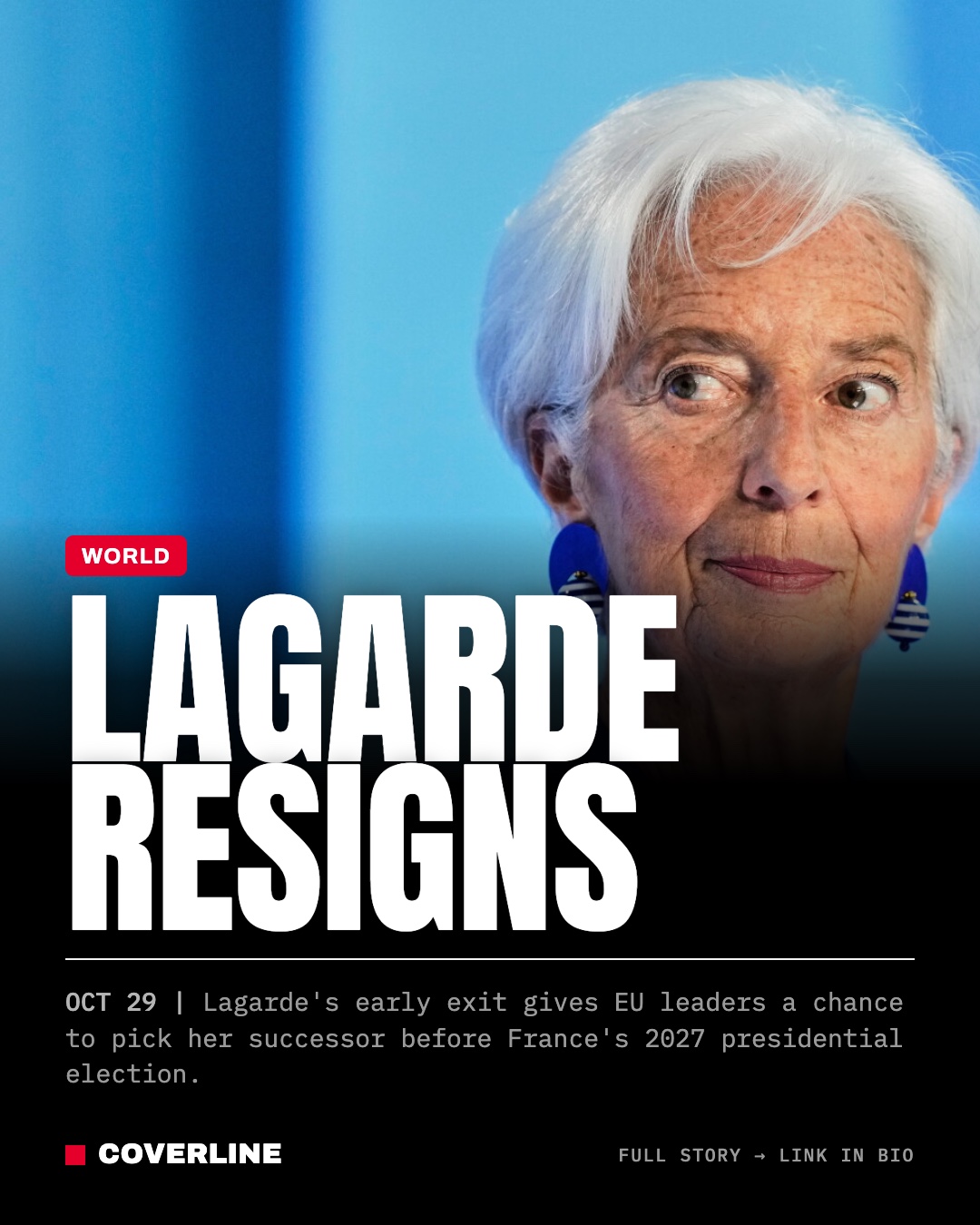
Christine Lagarde will step down from the European Central Bank on Feb. 7, 2027, the bank said Thursday. That's nine months before her term was due to end.
She's 70 and has led the bank since November 2019. Her early exit clears the way for European leaders to pick a replacement before France holds its presidential election next year, the Associated Press reported.
Lagarde told the ECB's governing council and European Council President Antonio Costa of her decision, according to DW. Costa said the search for her successor would start immediately. "To ensure a smooth transition to the next leadership of the ECB, the process for the appointment of her successor will be initiated today and will proceed without delay, with a view to a timely decision," he said, DW reported.
No official reason was given for the timing. There has been speculation, DW reported, that Lagarde chose to leave early so EU leaders could name a successor before French elections in the spring, a vote that could give a eurosceptic far-right win influence over the pick. The 21 eurozone governments choose the ECB president.
Costa credited Lagarde's seven years at the helm through a run of crises. "Through a global pandemic, a war in Europe, energy crises and inflation shocks, she has provided a steady and determined stewardship, helping to safeguard stability and the resilience of the euro area," he said, according to DW.
Lagarde ran the International Monetary Fund from 2011 to 2019 and served as France's finance minister before that. She said little about her own reasoning. "It has been a great pride and a huge privilege to serve this institution," she said in a video posted on social media, the AP reported. "I think that I leave this institution with a sense of good work done and an ECB that is fit for the future."
Her announcement landed during a tense week for the bank. The ECB was expected to hold its deposit rate at 2.5% at Thursday's meeting while signaling another possible increase before year's end, DW reported. Rates had already climbed twice since June, a response to inflation tied to the energy shock from the Iran war.
France's finances loomed over the meeting too. French bond yields climbed to a 25-year high last week amid a budget standoff, and recent protests over public spending turned violent at times, DW reported. Some analysts have floated the idea of the ECB using its Transmission Protection Instrument to buy French bonds if yields spiral. Most observers doubt the conditions for that tool have been met, DW reported.
Lagarde's successor takes over on Feb. 7, 2027.