Fake Alerts
Hacked emergency apps spread false nuclear and chemical attack warnings across Ukraine and Russia.
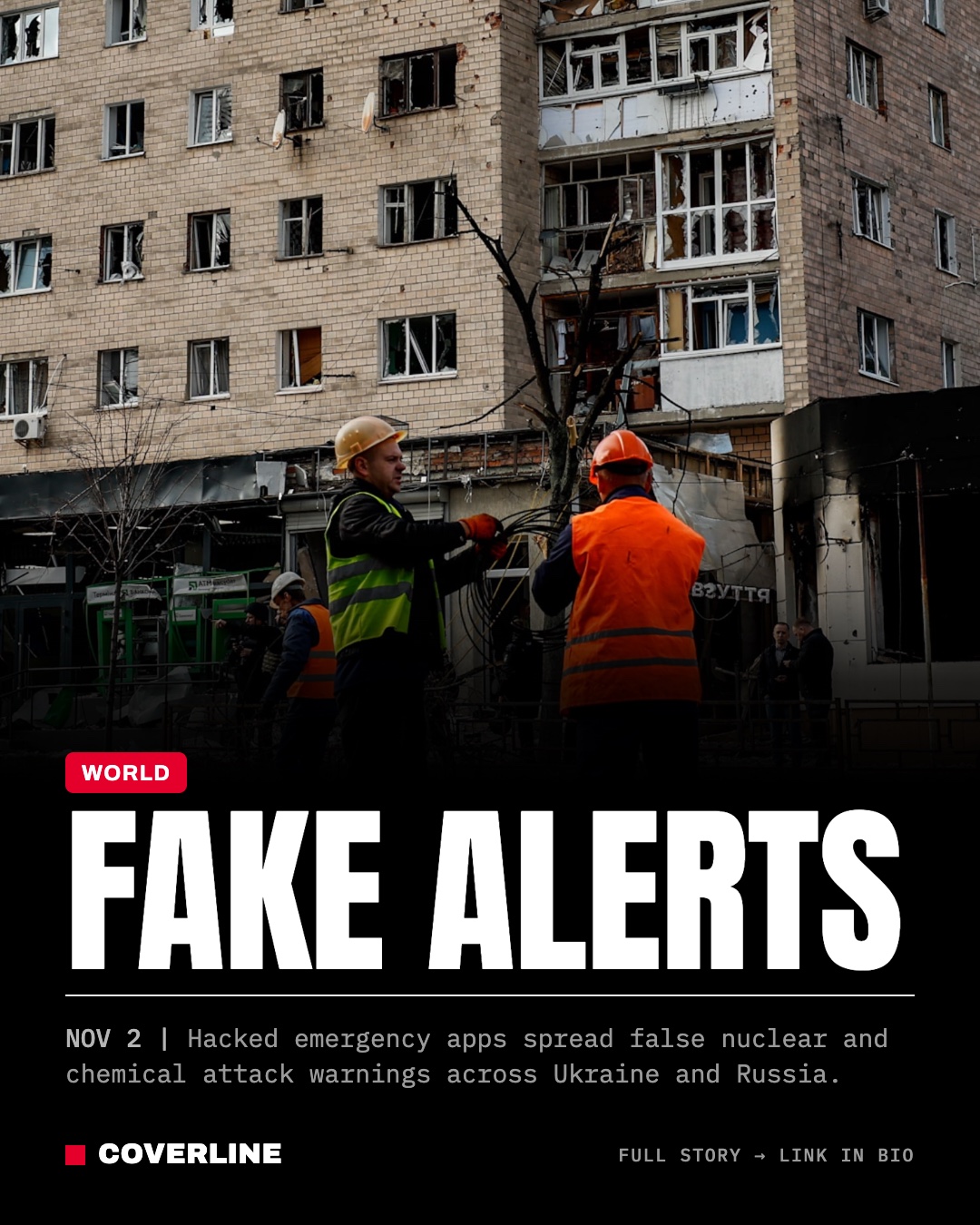
Hackers slipped fake nuclear and chemical alerts into Ukraine's air-raid app Sunday night. Russia reported its own breach hours later.
The messages hit around 10:45 p.m. in Kyiv, telling residents to stay inside and citing a radiation hazard, a chemical threat and street fighting in the capital, NBC News reported. One alert, written in Russian, claimed all of Ukraine was under nuclear alert. "Don't worry. Oreshnik is in action," it added, a reference to a Russian hypersonic missile, according to NBC News. A pro-Kremlin Telegram channel called Mash said a group named Hitcore told it the group carried out the breach. Neither NBC News nor ABC News could verify that claim independently.
Ukraine's air force said the Air Alert app had been "compromised by the enemy" and confirmed there was no radiation threat, NBC News reported. The app's creators called it a cyberattack and said they were restoring service. Those same alerts warned of a chemical attack and street fighting in Kyiv, BBC News reported. Russia's equivalent app pushed false alerts of its own a few hours later. Both countries blamed hackers.
The breach landed just as a rare humanitarian ceasefire between Ukraine and Russia expired at midnight, CNBC reported. It began Oct. 27 and let aid reach the occupied city of Oleshky in the Kherson region, the longest local truce since Russia's full invasion began in 2022, according to CNBC. Ukraine's military said Russia used the lull to reinforce positions and move ammunition. Early Monday, Russian drone strikes in Kherson hospitalized a 62-year-old woman and a 73-year-old man, ABC News reported.
Russia's Emergency Ministry said hackers pushed a false alert to 33 of its 89 regions around 2:45 a.m. Moscow time. The vulnerability behind the attack had been found and was being fixed, the ministry said, according to ABC News. Its broader alert system, including SMS and sirens, kept working normally throughout.
By Monday, Ukraine's State Emergency Service said its national alert system was running normally again.
Kremlin spokesman Dmitry Peskov said Russian state agencies face constant cyberattacks, including a growing number that use artificial intelligence.
"All government bodies must take steps to improve the cybersecurity of our digital resources," Peskov told reporters, according to ABC News.