Iran Strikes
The U.S. strikes Iran's Qeshm Island hours before Tuesday's midterm elections, officials say.
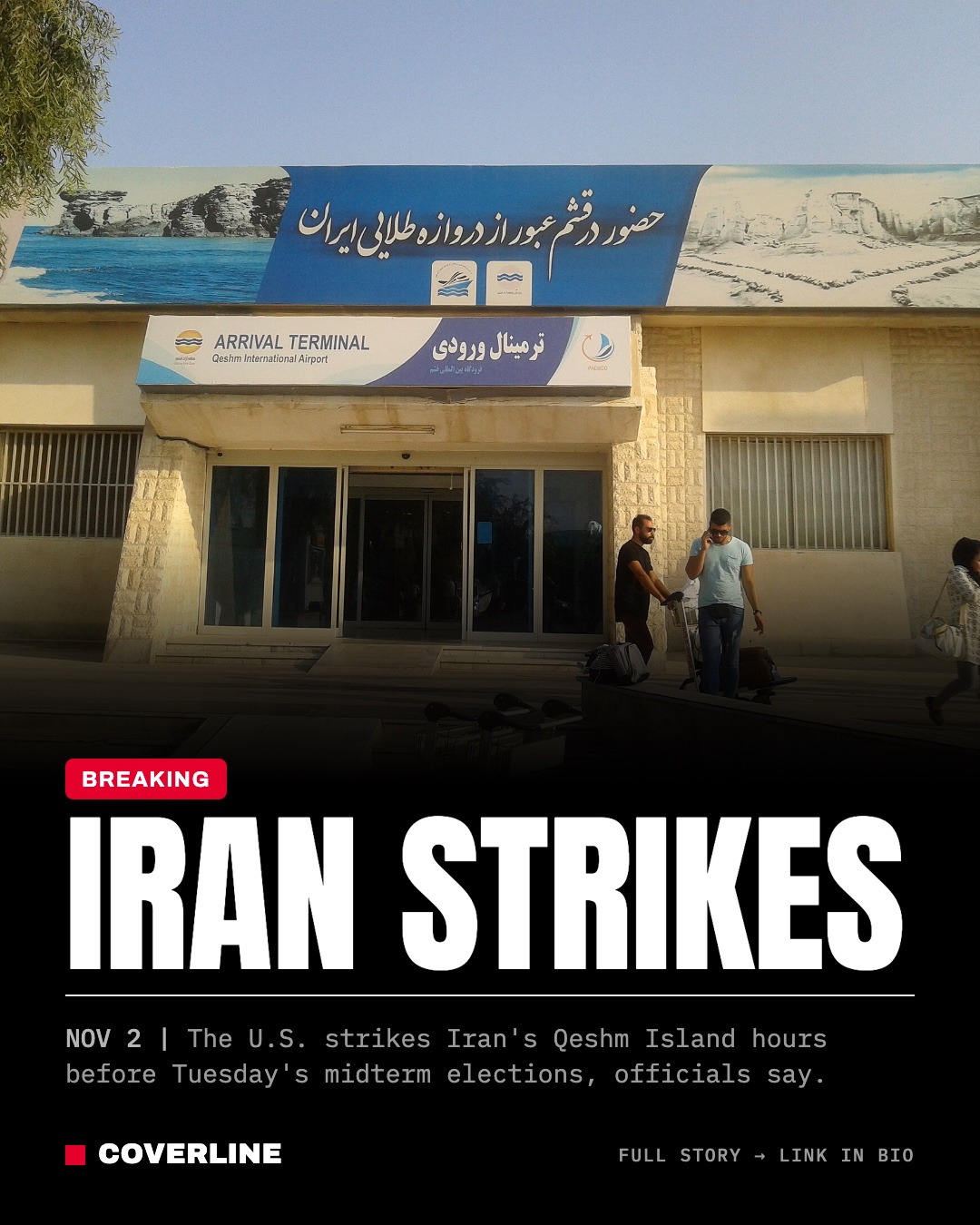
Tuesday night's midterm elections were still hours away when the U.S. military struck Qeshm Island. U.S. officials told The Wall Street Journal the strikes were "limited," CNBC reported.
Qeshm sits off Iran's southern coast near the Strait of Hormuz. It's the largest island in the Persian Gulf. CNBC reported the island has become a suspected hub for anti-ship missiles, mines, drones and attack craft, all stored in underground tunnels. An unnamed official said Washington has run a quiet campaign of limited strikes against Iran for weeks, kept low profile to avoid signaling a wider war.
Trump said Monday the U.S. had no choice but to wage war against Iran to stop it from acquiring a nuclear weapon. "We're not going to allow Iran ever to have a nuclear weapon," he said, adding that Iran's leaders "understand that." Vance told CNN he and Trump feel "really good" about reaching a "negotiated settlement" with Tehran. He called Iranians "unpredictable," though, and said Trump still holds "kinetic and non-kinetic" options on the table. No deadline has been set for a deal, Vance said.
Rubio struck a different note Sunday. He said he wants the conflict resolved "diplomatically" and would rather avoid military force, CNBC reported.
Months of upheaval inside Iran preceded the strikes. Earlier this year the U.S. and Israel launched air strikes that killed Iran's Supreme Leader, Ayatollah Ali Khamenei, according to BBC News. Those strikes followed a crackdown by Iranian security forces on street protests that began over economic grievances and grew into calls to end the Islamic Republic. Iran's embassy in London told the BBC that outside powers, the U.S. among them, encouraged the unrest by supplying weapons and undermining public security.
Samira, a mother, told BBC Panorama that security forces shot her 16-year-old daughter, Sevda, dead during a protest near Tehran in January. Sevda had followed the deaths of Mahsa Amini and Nika Shakarami, two young Iranian women whose deaths helped ignite nationwide unrest over the country's dress code laws, according to BBC News. Samira fled Iran on foot, she said, crossing mountainous terrain. She now lives abroad in hiding.
The strikes on Qeshm continued Monday. Vance said the administration still has set no deadline for reaching a settlement with Tehran.